
Two companies. One way of working that doesn't exist yet.
After a merger or acquisition, managers and employees look to HR for the answer to one question: how do we do it here now? Treams brings goals, conversations, and feedback in both halves of the company onto the same line, so people know what is expected from day one.


The integration is won or lost in the first 90 days after the signature.
A merger gets celebrated in a press release and lived in the 1:1. On paper, everything is one company. In practice, one half still runs yearly reviews and tight scoring forms, and the other half runs quarterly check-ins and open development plans. That difference is not the problem in itself. It becomes the problem when it stays unspoken for months.
What happens then: employees from camp A compare their review to one from camp B and see unfairness. Managers from camp B get someone from camp A on their team for the first time and don't know which standard to hold. HR gets questions without answers, because there are two truths at the same time.
A merger is not a culture change. A merger is two cultures running into each other every day until someone takes the lead.
Treams is where that lead becomes visible. Not as a policy document. As a shared rhythm in the week.


One rhythm. Across both halves.
Up and running before the first review.
One set of goals two teams can stand behind
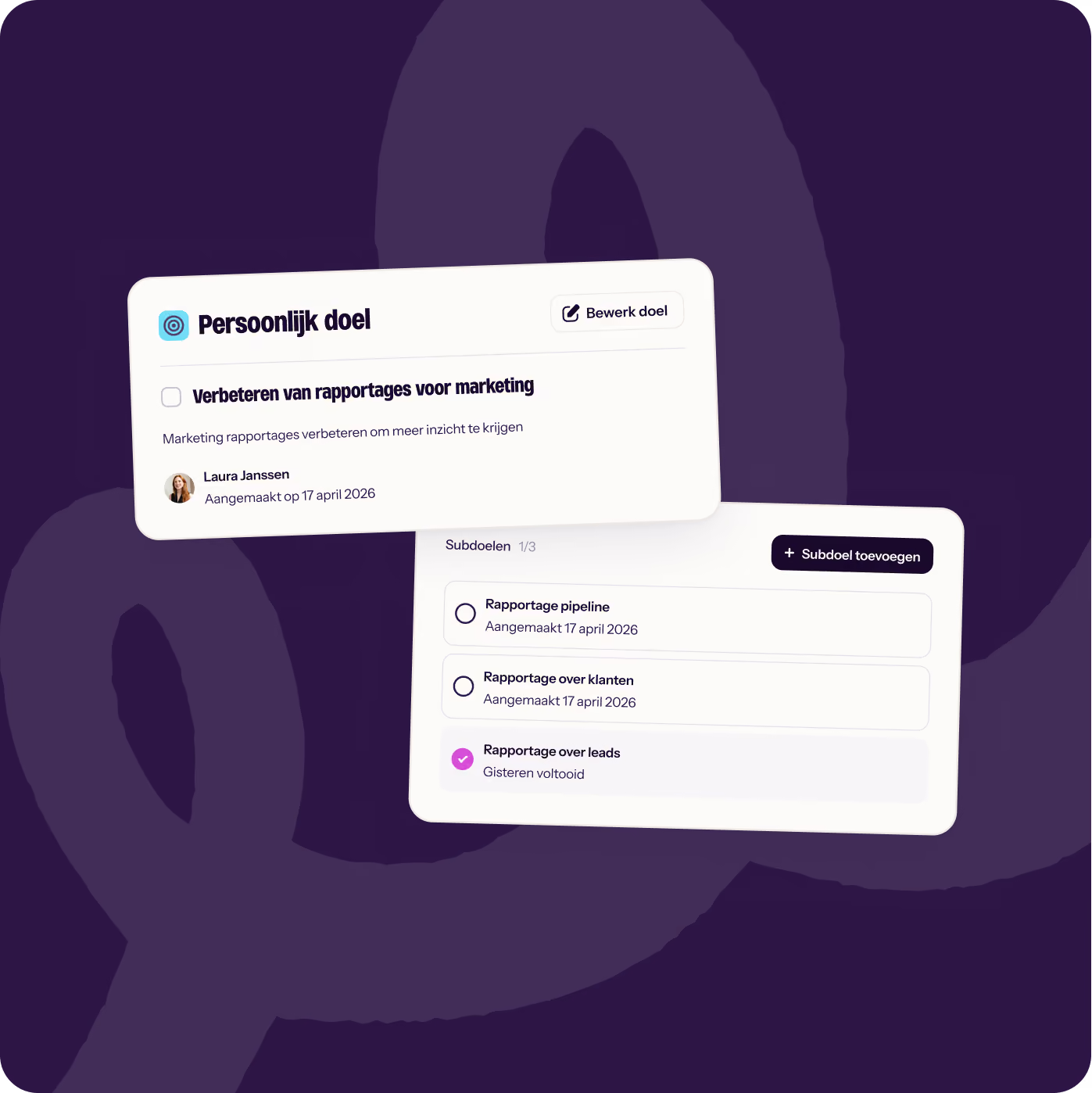
After a merger, goals get fuzzy. Some were set under the old flag, some are on pause, some only live in someone's head. Treams resets the line from the top down, so everyone sees what they're contributing to under the new flag.
Cascading goals
Set the new org-level goals once, and let them push down to department, team, and individual without double entry. Every employee can see what they contribute to under the new flag, and where their work connects to a target their old company never had.
Feasibility tracking
Every goal gets a status: Will make it, Close call, or Won't make it. HR sees at a glance which way the first quarter under the new flag is tipping, by team and by side of the business, instead of waiting for the end-of-cycle report.
Archive old goals
Park the goals that belonged to the previous company in one action, without losing the history. The slate is clean for the new cycle, and the audit trail is still there when someone asks how a target moved.
The same conversation rhythm
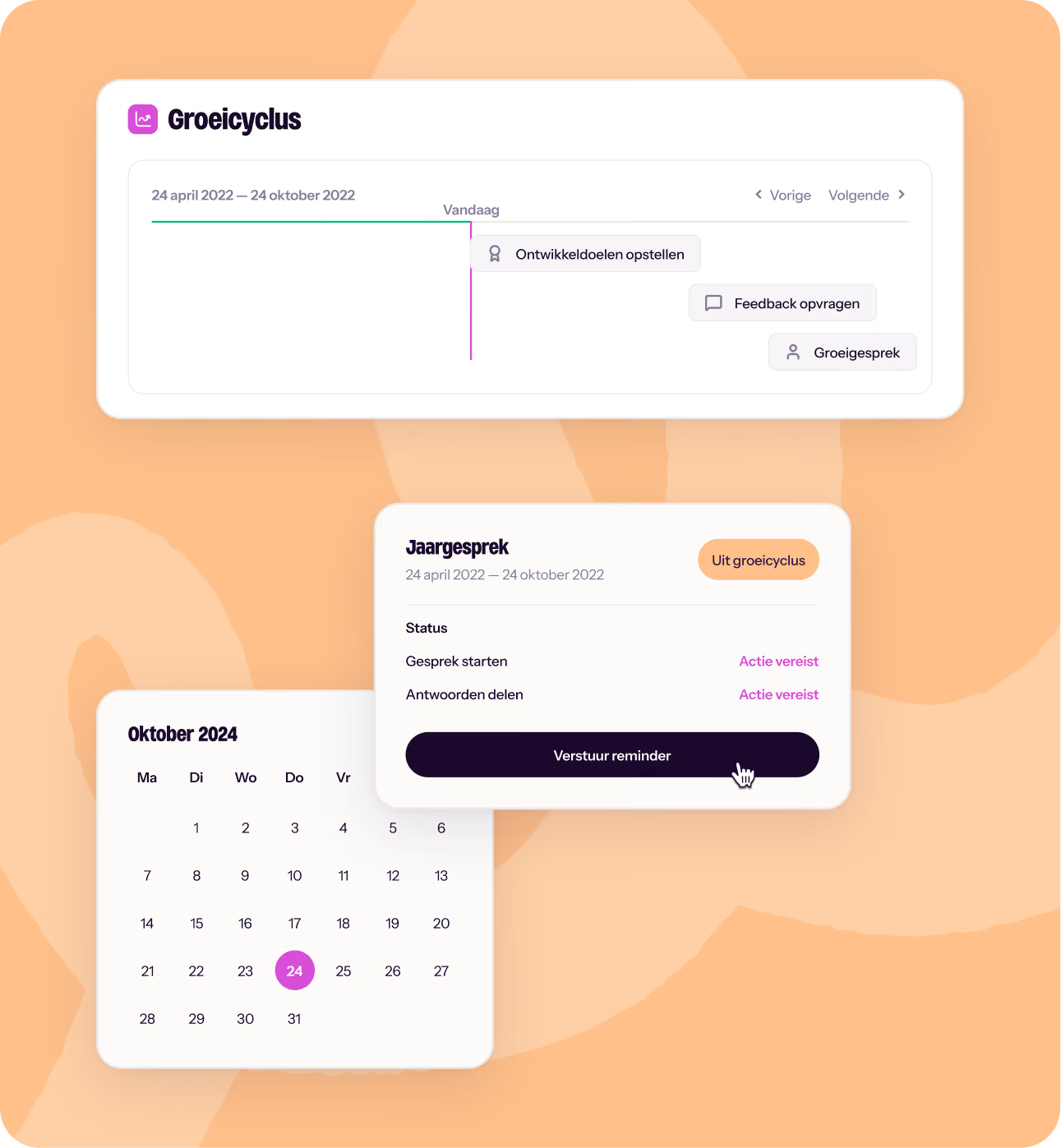
At one company the 1:1 was weekly. At the other, it only came up at review time. Treams brings the rhythm itself, so HR doesn't have to chase anyone to pick the other side's habit up.
Recurring 1:1s
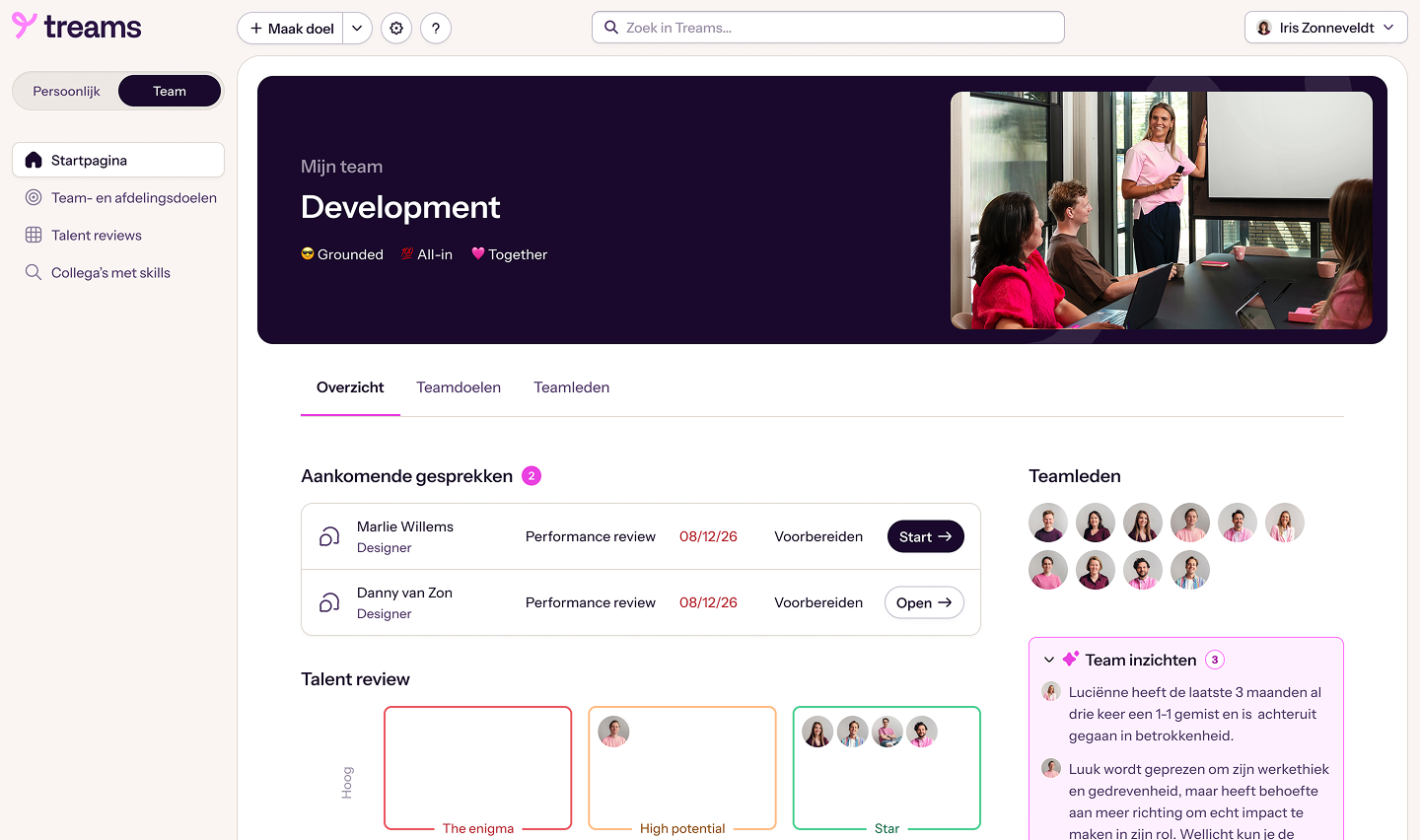
Manager and employee both add to a shared agenda before the meeting, so nothing important gets dropped. AI prep pulls in context from goals, recent feedback, and the last conversation, so the manager walks in ready even when they inherited the report two weeks ago.
Carry-over actions
Action items from each 1:1 roll into the next meeting automatically, so a topic that was raised twice doesn't quietly disappear after the merger. The manager and employee always know what was decided and what is still open.
System-led reminders
The nudge to schedule, prepare, or follow up comes from the platform on a rhythm HR sets once. HR stops being the person who chases managers, and managers stop being the person who chases their direct reports.
Feedback that doesn't wait for the next review
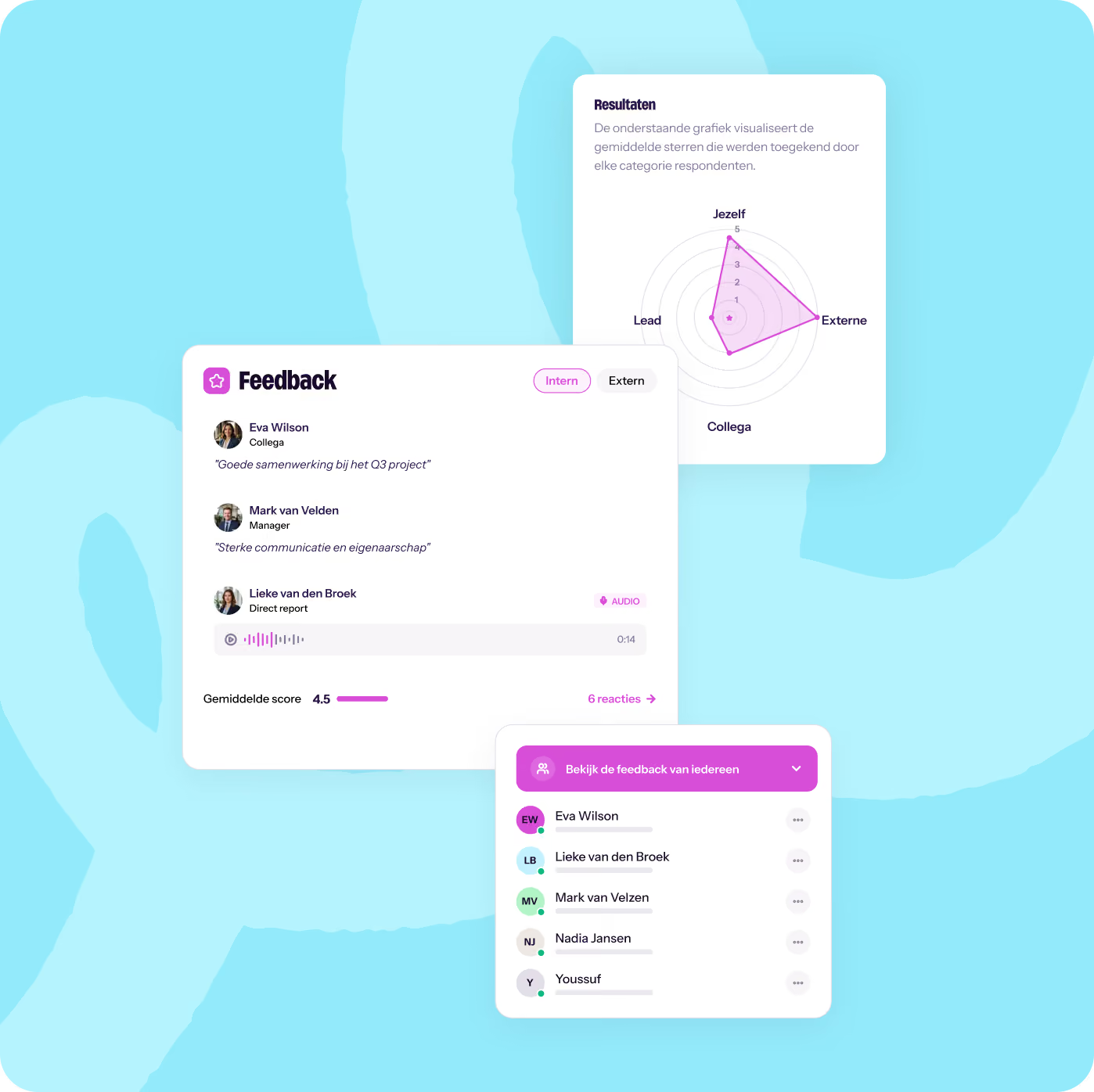
After an acquisition, people are full of observations that have nowhere to go. Treams makes feedback two clicks, and the first 360° round already runs on the same setup across both sides.
360° feedback
One setup for the whole company, including external respondents like clients and partners. The first round under the new flag uses the same structure on both sides, so nobody can argue the bar was higher for one half than the other.
Ad hoc feedback and kudos
Two clicks to send feedback or recognition to anyone in the company, with or without context attached. The moments that used to get lost between the old review cycle and the new one have a place to land, and managers from the other half get a quick read on people they've only just inherited.
Voice memos
Managers who would rather speak than type can record feedback in 30 seconds and send it on. Useful right after a presentation or a tough conversation, when the observation is sharp and a written form would have killed it.
A growth path that holds up under the new flag
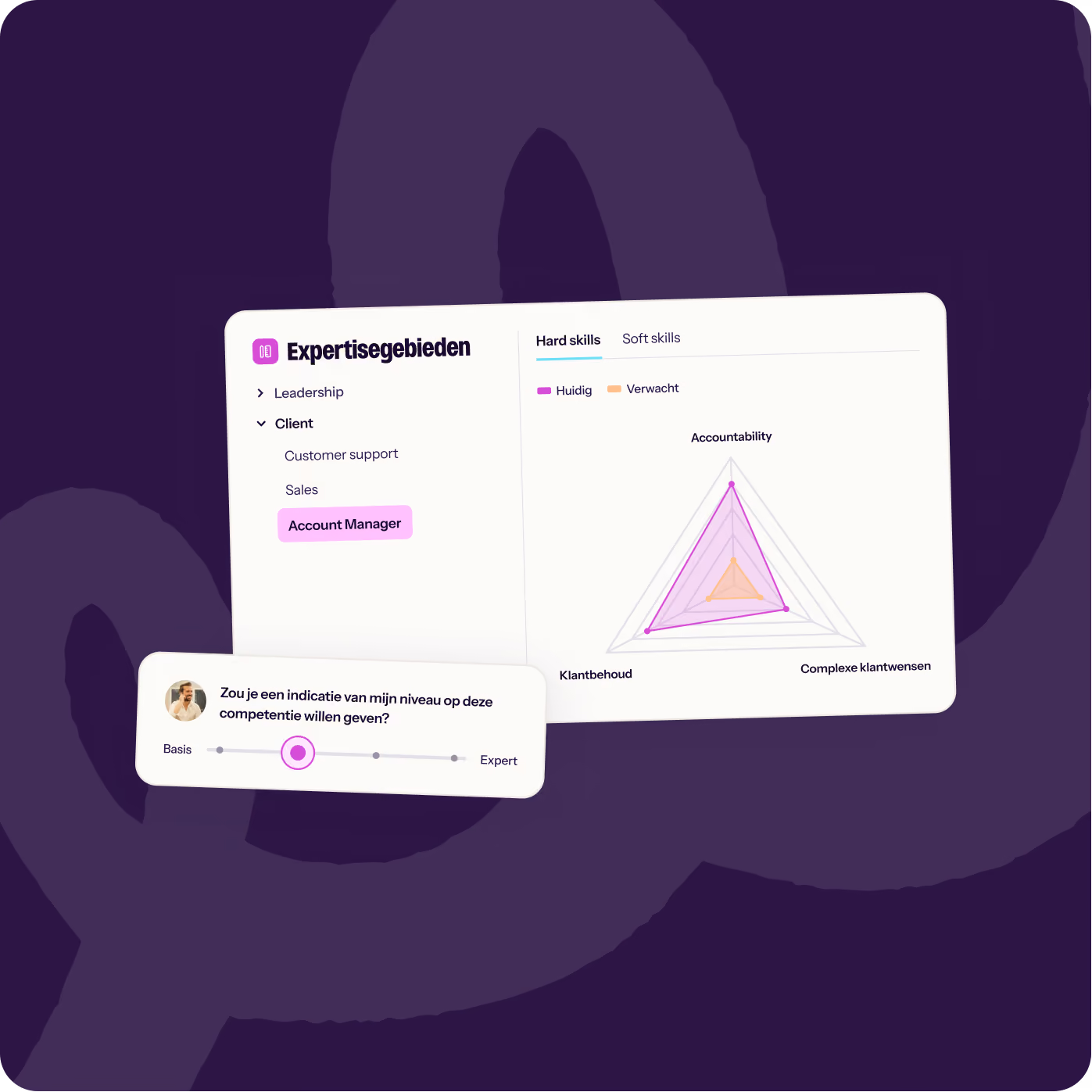
The biggest retention question after a merger is asked louder than before: is my future still here? Treams shows every role its next step, including the hybrid roles that only exist because of the deal.
Growth paths
Every role has a visible next step and the skills that get you there, including the hybrid roles that only exist because of the integration. Employees stop wondering whether they still have a future under the new flag, and managers have something concrete to point to in the first 1:1.
9-grid talent reviews
One grid across the whole company, calibrated together by managers from both sides. The combined leadership team gets a single picture of where the talent sits, instead of two separate lists that nobody trusts to be measured on the same bar.
Skill gap analysis
See where the two halves still don't cover each other, by team, role, or business unit. HR walks into the integration steering committee with a clear answer on where to hire, where to redeploy, and where the new combined organisation is strongest.
What our
clients say.








Ready to see it
for yourself?



Can we switch it off?
Yes, you can. We just don't recommend it.
Without context, AI gives generic answers. With context it becomes useful: better insight, sharper recommendations, and less time spent preparing and writing things up. That's where the gain for your managers and your teams sits.
Questions about privacy, security or works council approval? Talk to us, and we're happy to think it through with you.
And what if the two companies have completely different ideas about performance?
The goal is not to pick one and leave the other behind. The collaboration with Treams starts with a session in which we design the rhythm together: you sit down with our experts, we look at what worked for each company, and we shape a rhythm that fits the new organization under one flag. With Treams, you're not buying software, you're choosing a partner who has done this before with companies in the same situation. We've seen which choices hold up after the first review and which quietly fall apart, and we bring that experience with us. The rhythm you walk out with is yours, designed for where you're headed, not a copy of where either side came from.
We've only just closed the deal. Isn't it too soon to introduce something new?
Usually quite the opposite. The longer two rhythms run alongside each other, the more unfairness people feel between the two halves, and it's precisely during this period that two work cultures come together. How everyone is doing, who's hesitating, who's checking out: that's what you want to know before it becomes a problem, not after, and anonymous measurement gives you that picture without people having to hold back. Most of our merger clients therefore started within the first 90 days after signing, one side first, the other within a quarter.
Can we configure different surveys for different teams or departments?
Yes. Treams lets you set different survey cadences, question sets, and themes per team or department. Some organisations run a shared core question set across the whole company and layer team-specific questions on top. You control the frequency, the content, and who receives what.