Growth is a weekly thing.
Not an annual reward.
The 1:1 is where growth either gets named or gets missed. Career paths, skill profiles, and talent reviews give managers something real to bring to that conversation. For HR, it's the first time the talent picture is actually clear.

Trusted by HR teams across the Netherlands



Every year the cycle resets.
None of these do.

People leave because they can't see a future.
Most employees don't leave over money. They leave because nobody ever showed them where they could go next. By the time the resignation lands on your desk, the conversation is months too late.
Half your team's skills are invisible.
You have the skills you need somewhere in the organisation. You just can't find them. Roles get filled externally because internal capability is invisible, and people who would have been great in another team never get asked.
Talent review is a spreadsheet exercise.
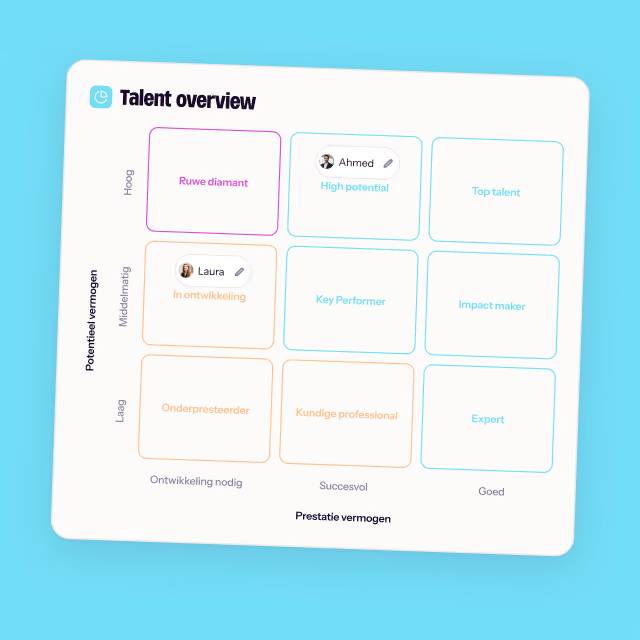
Once a year, HR pulls together a 9-box in Excel. The numbers go into a deck, the deck goes into a meeting, and nothing actually changes for the person whose name is in the box.

One system that makes development
more than a conversation.

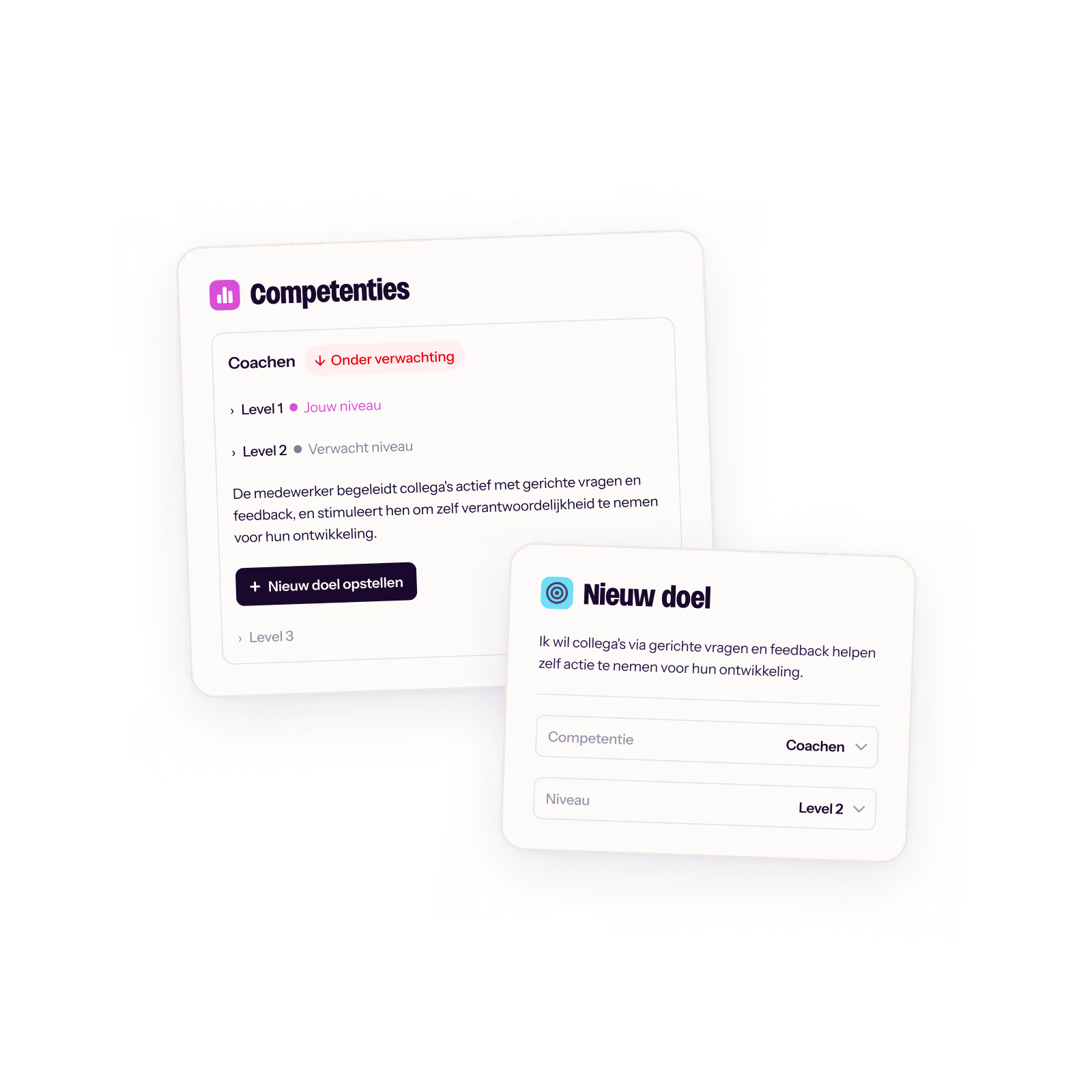
Growth paths & career tracks
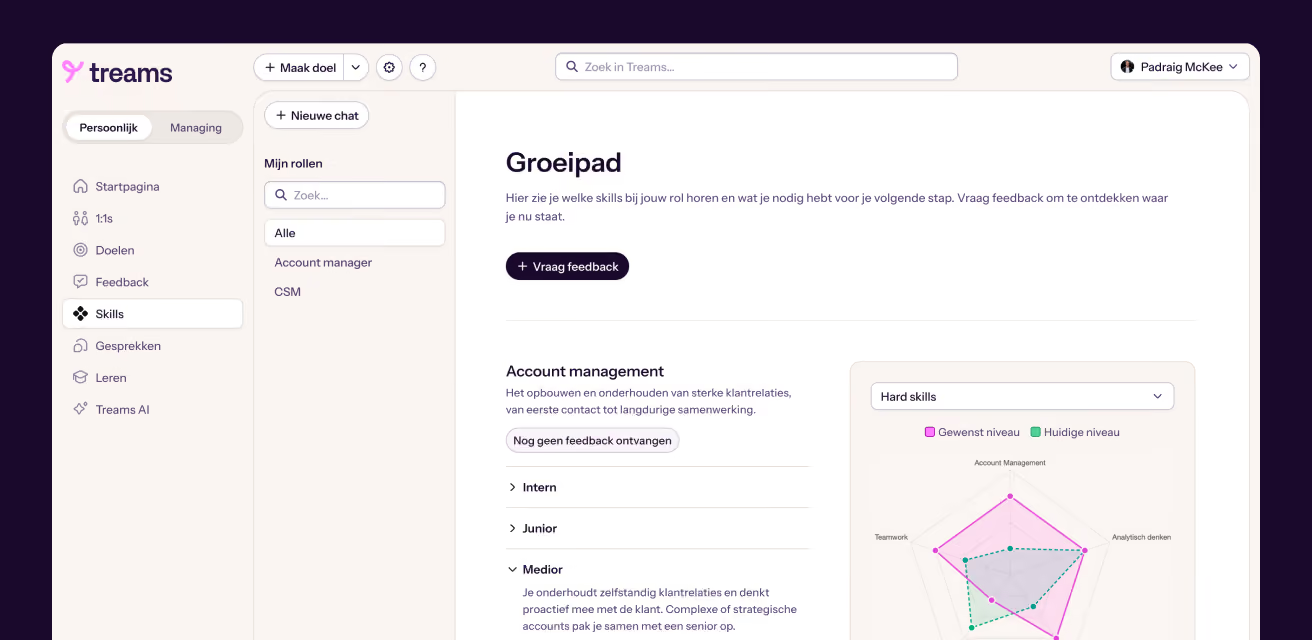
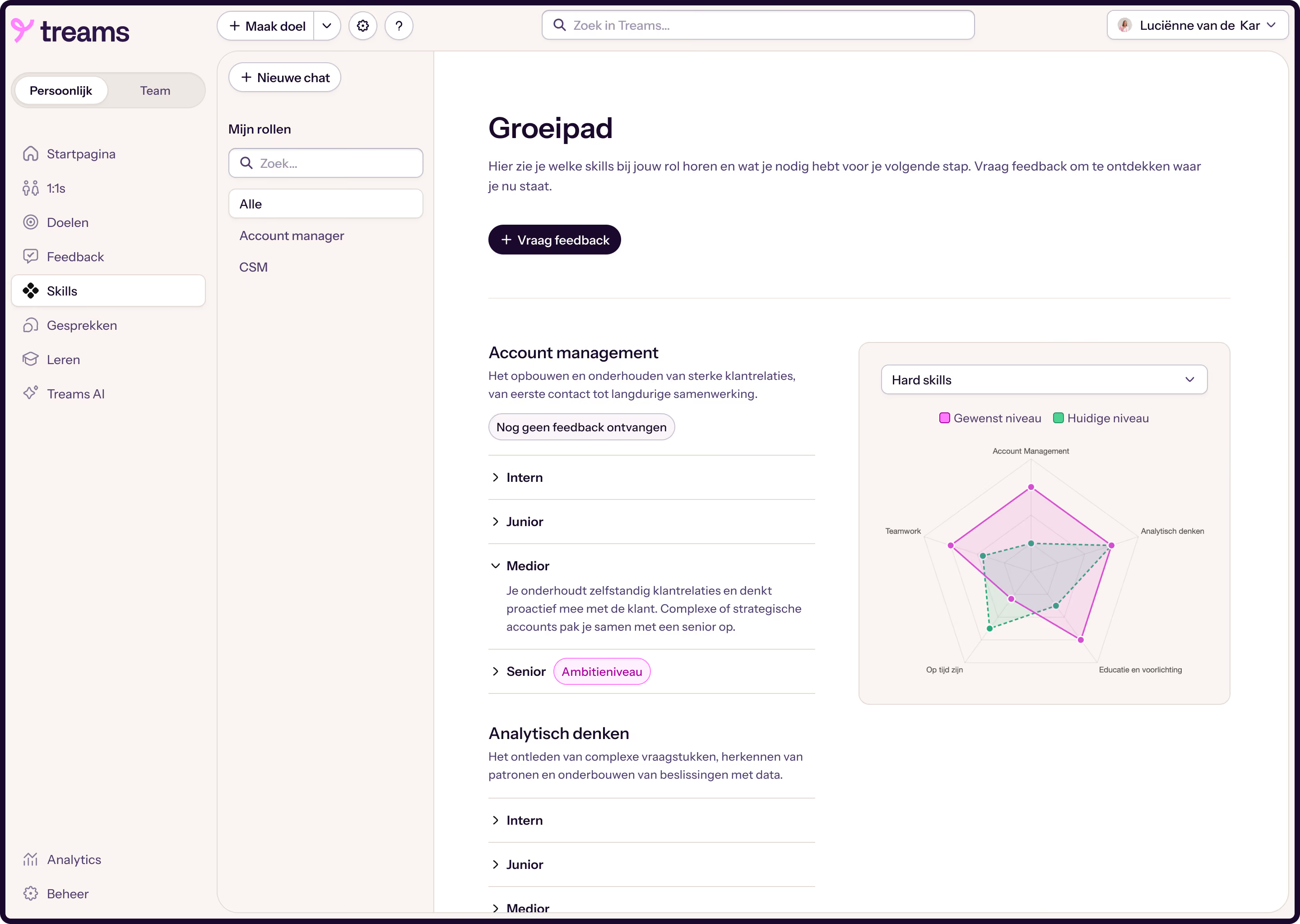
Concrete career paths per role and per team. Employees see what the next step looks like, what it requires, and how to get there. No more vague promises in a yearly review.
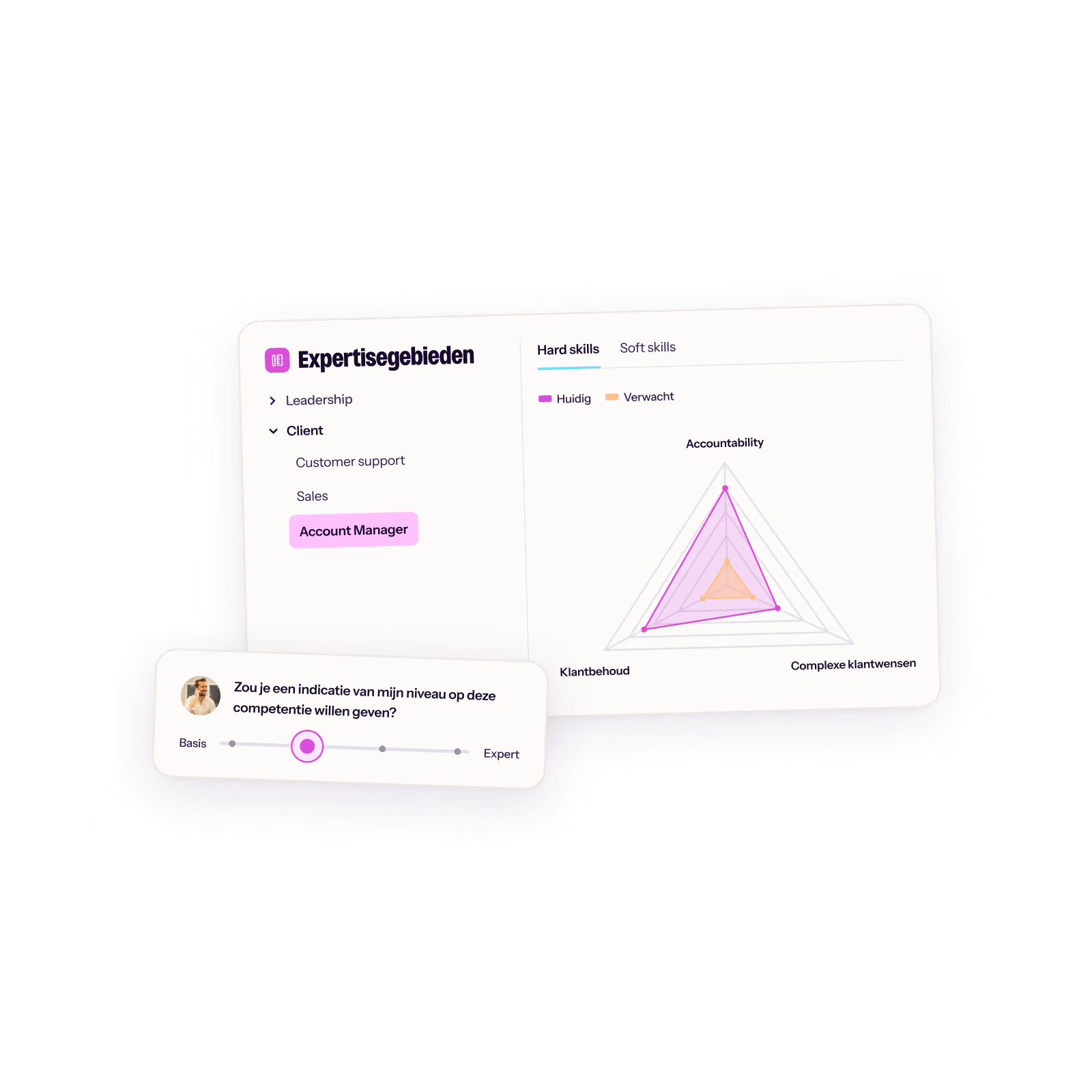
Skill matrix & gap analysis
Define what good looks like per role. Score skills during evaluations. See exactly where the team is strong, where the gaps are, and what to invest in next.
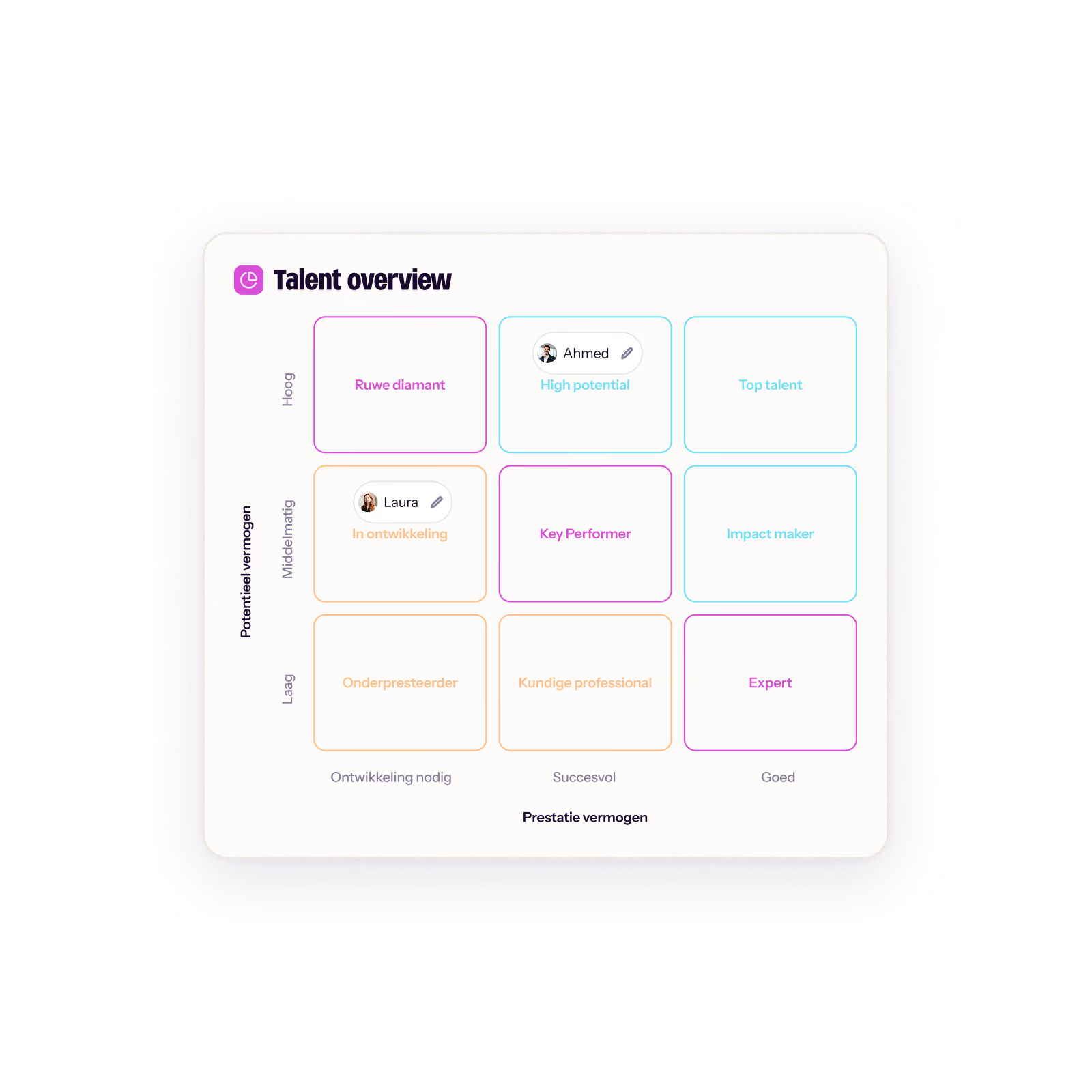
Talent review (9-box grid)
Replace the once-a-year Excel exercise with a structured talent review managers actually run together. Calibrate placements, capture motivation, and turn the grid into a decision-making tool.
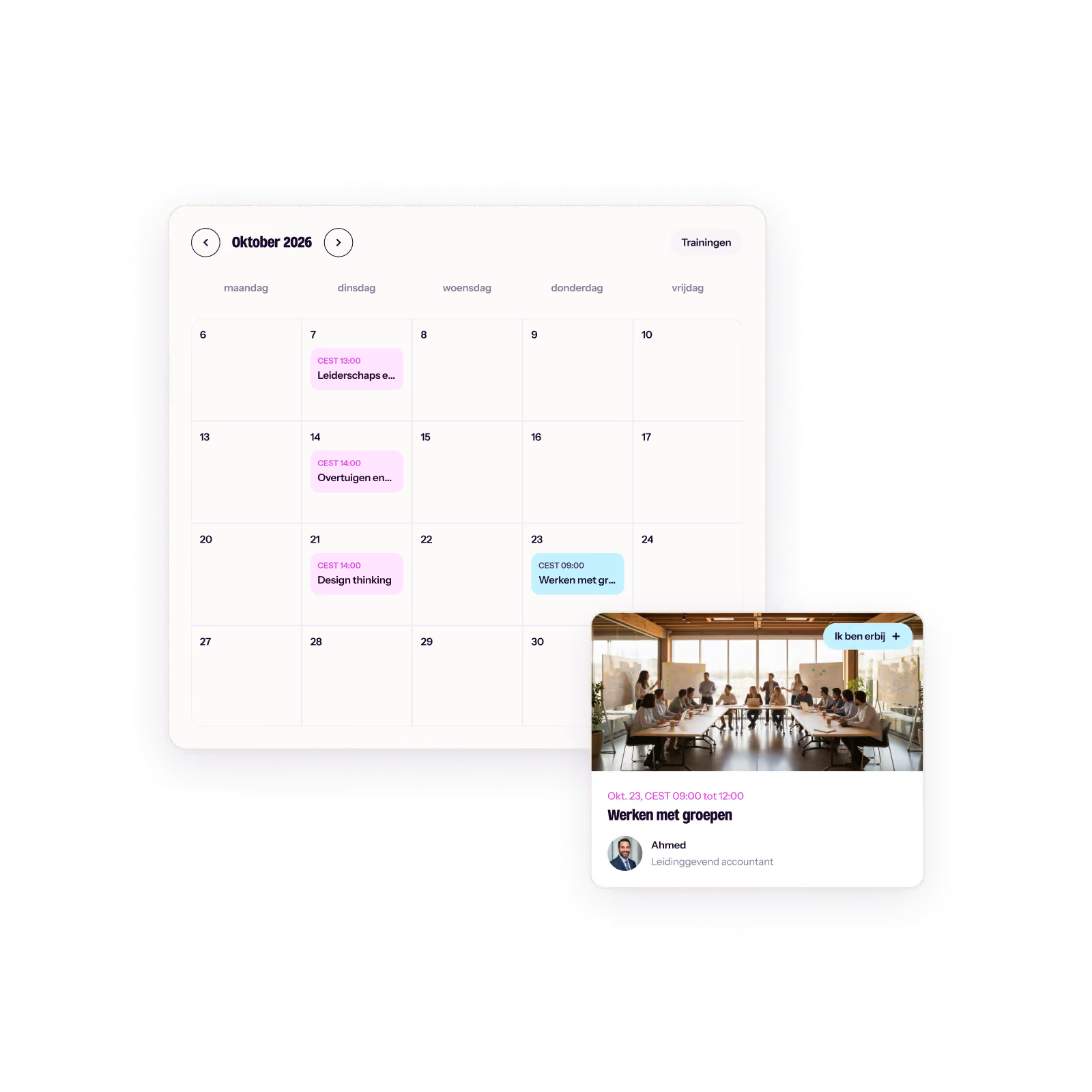
Learning & certificates
Publish trainings, let employees enroll, and track participation. Branded certificates land in their portfolio automatically. Learning becomes part of the rhythm, not a side project.
Why teams keep using it.
Consistently.
A clear path. A development rhythm that holds. And a real view of the talent across your organisation.

"We'll talk about it next year" doesn't keep anyone. Treams turns career paths into something specific: this is your role to grow to, and these are the skills you need.

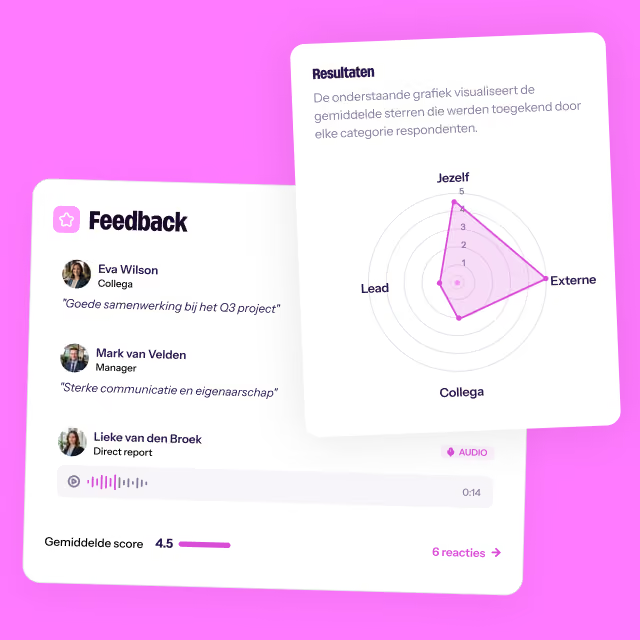
Most development plans get written in a review and never opened again. In Treams, growth goals sit next to performance goals and feedback, so the plan is part of every week's conversation.

Track how placements shift across cycles. Watch high potentials grow. Spot a team where nobody is moving and ask why. Talent is finally something you can see develop, not just measure once.

Stop having the same scoring debate every time. Skill profiles per role mean managers, employees, and HR all use the same definition of strong, solid, or still developing.

A talent review that lives only in a deck doesn't change careers. Treams ties placements to development plans, conversations, and goals. The review becomes the start of the work, not the end of it.

Every skill scored is a data point you keep. Search the organisation by capability. Staff a project from inside and show leadership that the talent they need is already in the building.

Deep integrations with the tools your team already runs on.



































What our
clients say.








Ready to see it
for yourself?









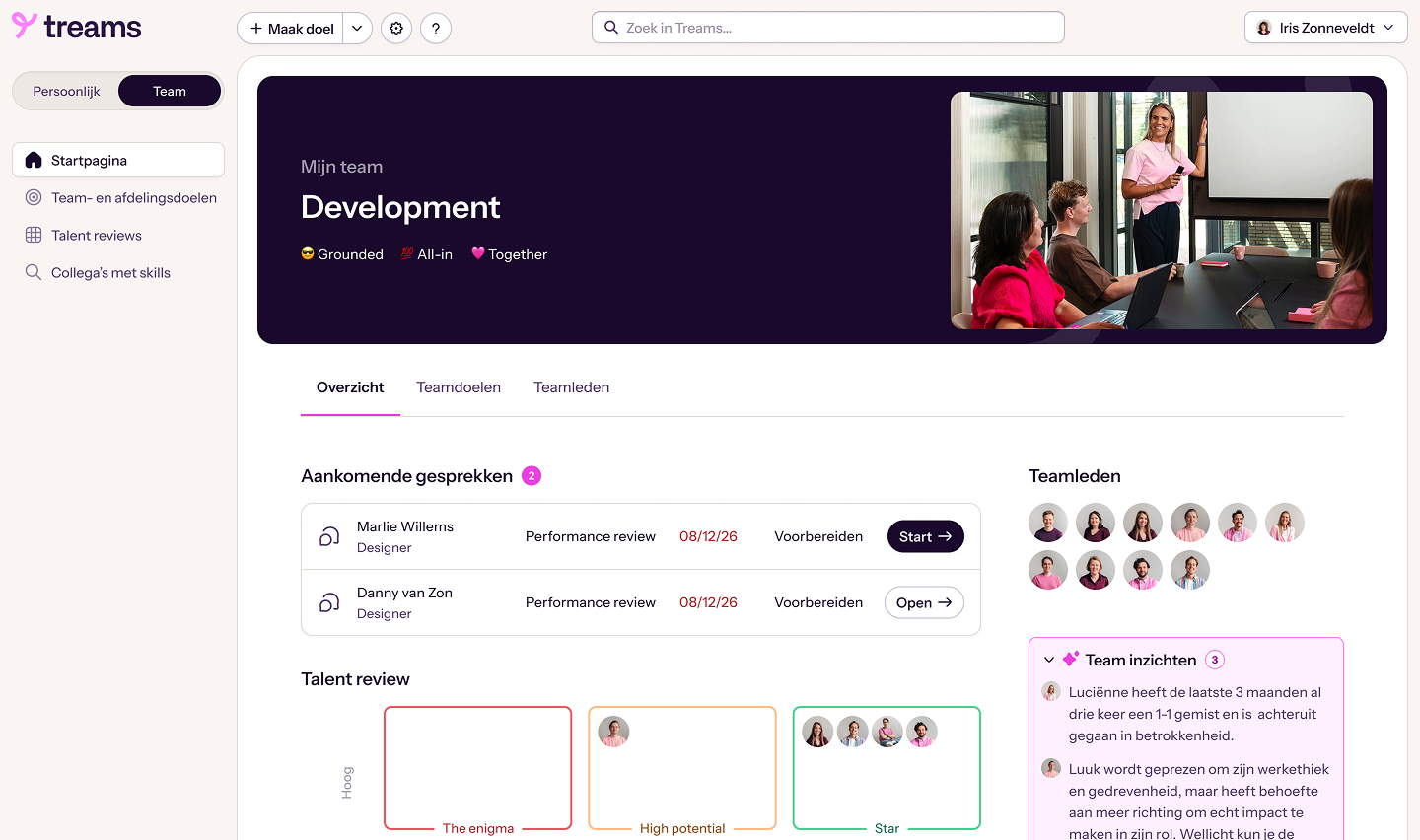

Development doesn't happen on its own.
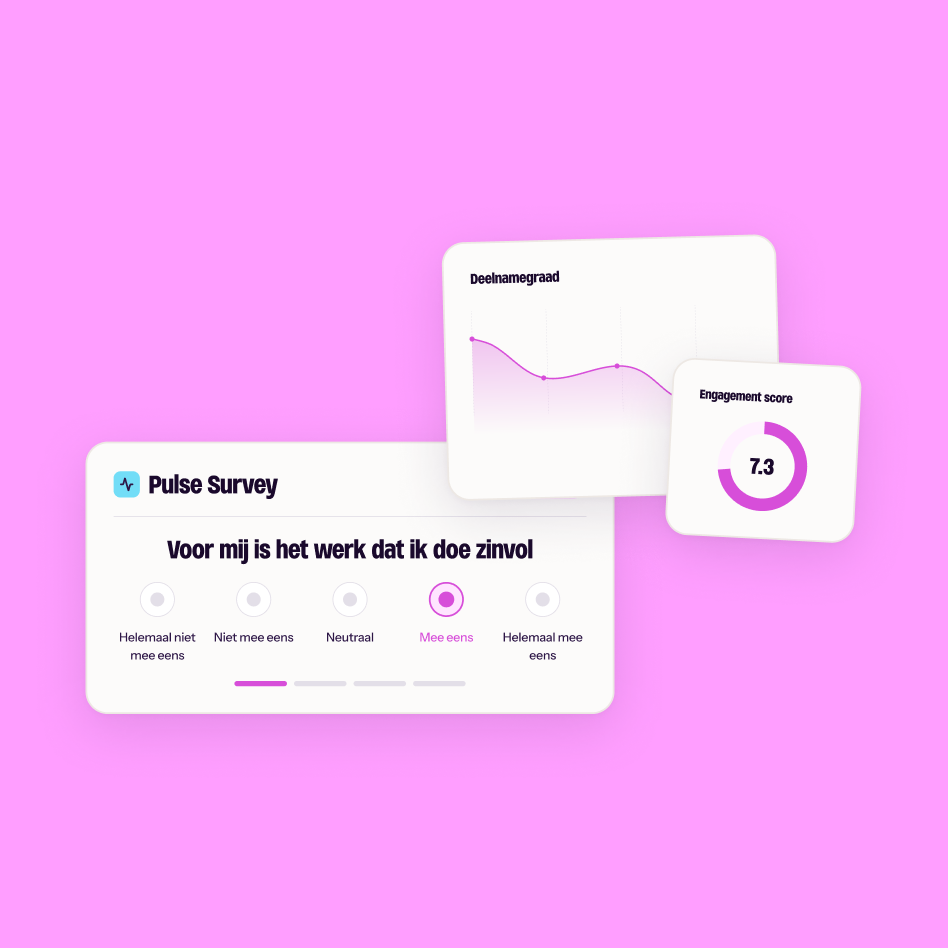

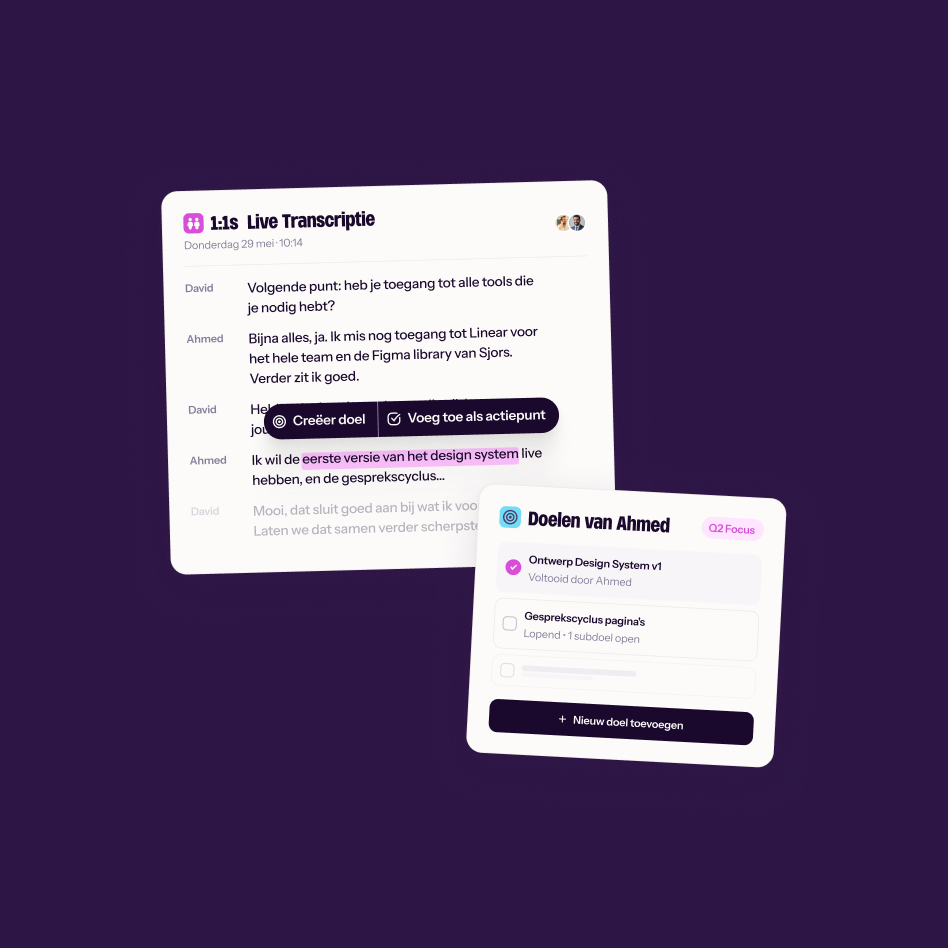

The weekly rhythm where growth actually gets noticed. Goals, 1-on-1s, and reviews that close the books, not write the story.
What's included in the Development module?
The Development module is part of our standard Momentum plan. For a full overview of what's included and how pricing works, visit our pricing page.
Read more about our pricing
Do you offer a free trial?
We prefer a human touch before to fully know what works best for your situation after which we can set up a personalised environment for you and your team to test.
Do managers actually use your performance software?
Fair question, and exactly why we start differently from other performance management tools. Most tools start from HR's point of view. Treams starts from the manager's. Your week, your 1:1s, your team and your calendar. That makes it not one more thing, but something that works within what you already do. It's why 86% of managers keep using it.