ANB no longer assesses where you’re falling short, but discusses where you want to go
Joyce Vissers phased out performance appraisal forms at ANB as early as 2020: no more ticking boxes, but conversations about what someone wants and is capable of. However, without a set format, some managers held lots of conversations, whilst others held almost none. She explains how, with Treams, constructive conversations became a regular part of everyone’s routine, and why ANB now recommends the platform to its own clients as well.
Marlie and Aafke guided us through the onboarding process. It went really well. If there’s anything I need, I just have to send an email and I get a quick reply.
Treams gives me a clear overview. I always have the relevant points to hand.

If I don’t strike up a conversation, how will I find out? With Treams, I’ll still be able to do that.
I’d already been having regular discussions, but they hadn’t been formally recorded. Now everything has been finalised.
With Treams, you have more frequent conversations – not just in November. That way, the assessment isn’t left until the last minute.
Treams is particularly helpful to me during follow-up meetings: it keeps track of the agreements made, so they’re set in stone. If agreements aren’t honoured, any future meeting loses its value.
We ran the two-day in-house session with our entire HR team and the management team in attendance. It was great fun, particularly the bit on vision and strategy.
There’s now a bit of an incentive. I can see who isn’t having any conversations.
Treams ensures that conversations take place more effectively and more frequently. Even if it’s just through an email saying: ‘Your POP conversation is coming up.’ People schedule it themselves, so it
I’ve also introduced Treams to one of our clients, and they’re really pleased with it.
From figures to people
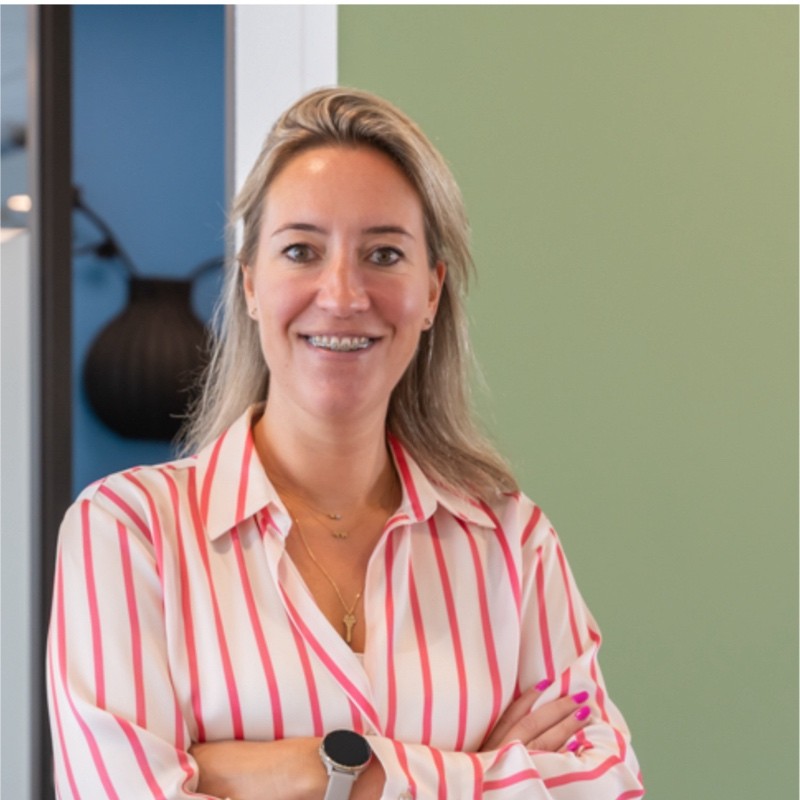
Joyce Vissers has been in charge of the HR department at ANB since 2020. She has also been a member of the management board since 2021 and, together with Jos Follon, oversees the entire organisation at ANB – over 70 people.
That management role fits in with what makes her happy: the business side of things, and what that means for people. “I enjoy visiting a company with an accountant. We discuss the company’s financial position and its plans for the coming years. That’s all very interesting, but how do you translate that into the day-to-day running of the business? Who are you going to hire? Do you need to train people, and is the right person in the right role? That naturally leads you to development. That really makes me happy.”
Some managers held a lot of meetings. Others didn’t.
She turned that same focus on ANB itself. One of the first things she tackled internally was the way in which appraisals were conducted. The appraisal forms were the clearest example of this. “We were still using those forms with tick boxes and competencies. You fill it in, I fill it in, and wherever we disagree, we discuss it. It was incredibly negative.” She turned it on its head. No more performance reviews, but an end-of-year review. No tick boxes, but a Personal Development Plan (PDP) with the questions that really matter: what makes you happy, what do you want from your work, and how do you want to develop?
In terms of content, it was all correct. It was just the format that was flexible, and that’s where it went wrong. One person had a PDF file somewhere, another had a few separate emails. And some people didn’t have any conversations at all. Nobody noticed.
And even the end-of-year review that did take place did not always give a fair picture. “If you sit down to discuss things in November and something happened in September or October, that becomes the main focus,” says Joyce. “Even though someone has been working on something all year.” She wanted an objective review, not an assessment determined by whatever happened to be the most recent event.
Now everyone does it the same way
Luciënne’s introduction to Treams actually came about by chance: a colleague who had worked with it before put her on the right track. It was a coincidence, but it came at just the right time. There was no immediate trigger, but there was a latent one: Joyce already knew that ANB needed to make further progress in this area. “That introduction wouldn’t have happened so quickly otherwise,” she says. “But I was simply really inspired by that conversation. We said: ‘Then it’ll be done more efficiently, done better and done more often.’”
ANB made few changes to the approach itself. That was already in place. What changed was the platform: everything was moved to Treams. Requesting feedback, reviewing previous conversations, using the PDP as input for the end-of-year review. And for our office of 70 staff, the integration with Loket was also important, so that everything was centralised in one place.
ANB got off to a thorough start. The two-day workshop took place in-house, with the entire HR team and the management team in attendance. This was not only for the organisation’s own implementation, but also because ANB’s consultants themselves visit clients where performance and development are often topics of discussion.
"We ran the two-day session in-house, with our entire HR team and the management team in attendance. It was great fun – particularly the bit on vision and strategy. Our consultants visit clients themselves where development is a key focus, so this allows us to convey the full picture."
Joyce Vissers
This was followed by the onboarding session with Marlie and Aafke. “They took us through everything step by step. It went really well.” And that contact has continued: Aafke checks in from time to time, and if there’s anything, a single email is enough. “I get a quick reply. It’s always sorted out, or we just sort it out together in a call. We have very little hassle: they simply take care of everything for us.”
Keep the dialogue going, and you’ll have an employee for life
For Joyce, the difference lies in two things. First of all: rhythm. Staff automatically receive a reminder that their PDP review is coming up, reflect on their progress, seek feedback and schedule the review themselves. “It’s much more top of mind. If everything is unstructured, you find yourself at the end-of-year review thinking: ‘I’ve actually only had one review this year.’ Now, performance is a theme throughout the whole year.”
Secondly: oversight. As a member of the management team, Joyce can now see whether meetings are actually taking place, and identify the reason if they are not – whether it lies with the individual or the team. This isn’t monitoring for the sake of it, but helps to take immediate action and adjust performance. If you don’t know what’s going on, you only find out when someone leaves, whereas a change of clients or other work might well have prevented it.
"If I don’t talk to you, how am I going to find out that you’re not being challenged? Then you’ll leave for another company, even though I could actually have done something about it."
Joyce Vissers
Joyce hears the effects of this in the workplace: at team leader meetings, during lunch sessions, and in the practice-based brainstorming sessions. There, she hears team leaders discussing current issues. “Oh, that person wants some coaching because they’ve got an issue here.” More coaching programmes are emerging from these conversations, not because people want to leave, but because they want to work on themselves, as personal development is now more top of mind. And the younger generation, which is increasingly embracing ANB, expects this as a given: a focus on goals, development and meaningful conversations.
For Joyce, the ultimate reward isn’t measured in figures. It’s employees who say they’re happy to have an employer who cares about them. “If you just do that well and keep the dialogue going,” she says, “then eventually you’ll have an employee for life, won’t you?”
ANB now recommends it to its customers itself
ANB’s HR advisers visit SME clients who are looking to develop their business but do not yet have a suitable application in place, and recommend Treams to them. Joyce introduced the platform herself to one client. “They’re really very happy with it. Especially with the AI tool, which really does make the work easier: it produces good summaries and gets to the heart of the conversations that have taken place.”
ANB is an accountancy & consultancy firm for SMEs, with financial reporting, payroll (30+ administrators), and HR practices.

Accountancy

70+ employees

Without a fixed format, some managers held regular development conversations while others held almost none, and directors had no visibility into which was happening.
Ready to see it for yourself?
Book a 30-minute demo. We'll show you what the manager view looks like, walk you through the implementation, and answer the questions you have.
More customer stories