AI needs context.
Treams already has
yours.
Treams remembers what happens across goals, feedback, 1:1s and your team. What was agreed, what changed and what matters next. So every conversation builds on the last.

Trusted by HR teams making use of Treams AI









Managing a team has quietly become a harder job.
Managers make decisions about their people every week. But what they need is scattered across goals, feedback, 1:1s, surveys, email and HR systems. They have to reconstruct what happened before they can act.

The Thursday decision
A new role opens up, someone hands in their notice or a team needs to be reorganised. Managers can't wait for the next cycle to work out what to do. They need a good answer by Monday.
Five systems, no complete view
What you know about someone is spread across goals, feedback, 1:1 notes, email, HRIS and chat. The information is somewhere. Managers piece it together every time they need it.
Last month gets lost
A good 1:1 happens. Feedback gets given. Someone agrees to work on something. Three weeks later, the next conversation starts and most of it has to be remembered all over again.
Work creates context every day. Treams is built to remember it.
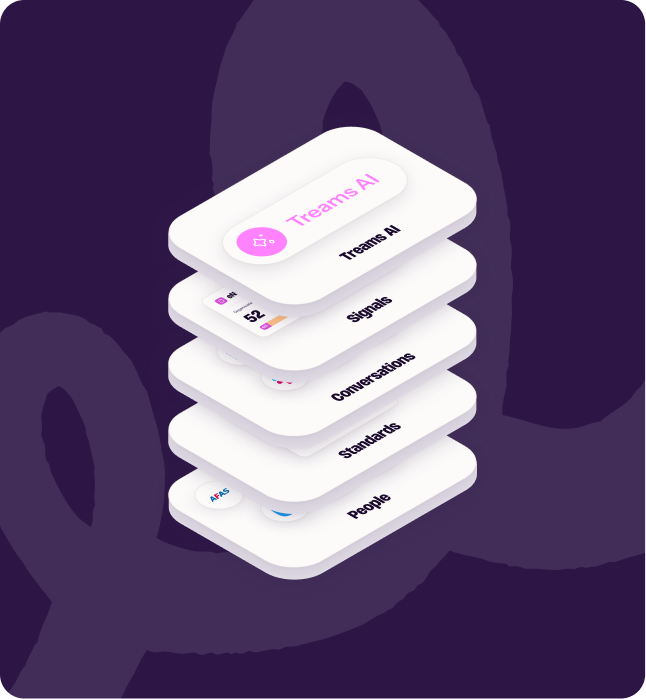
Goals change. Feedback gets shared. Conversations happen. Teams move. Treams keeps that context connected over time, so what happens today is still useful when a manager needs it tomorrow.

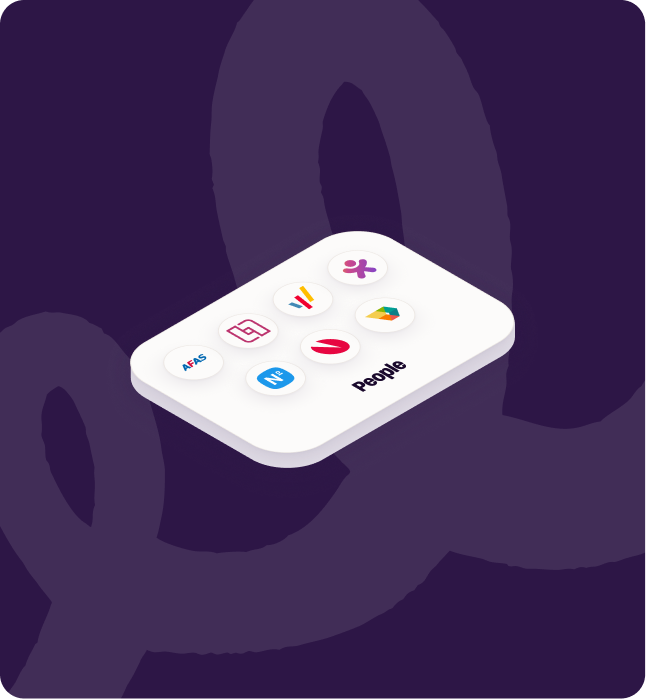
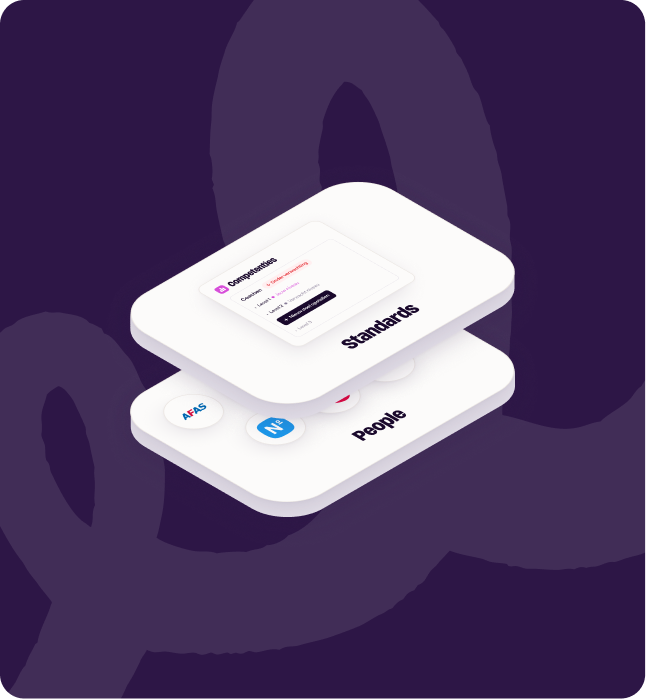
People.
Who works here, and who works together. Treams knows each person’s role, team, manager and place in the organisation, kept current through your HRIS. So it understands not just who someone is, but the people and structure around them.
Standards.
What good looks like here. Job profiles, competencies, goals, values, your cycle, your language. Activity on its own is noise. Held against a standard, it becomes performance.
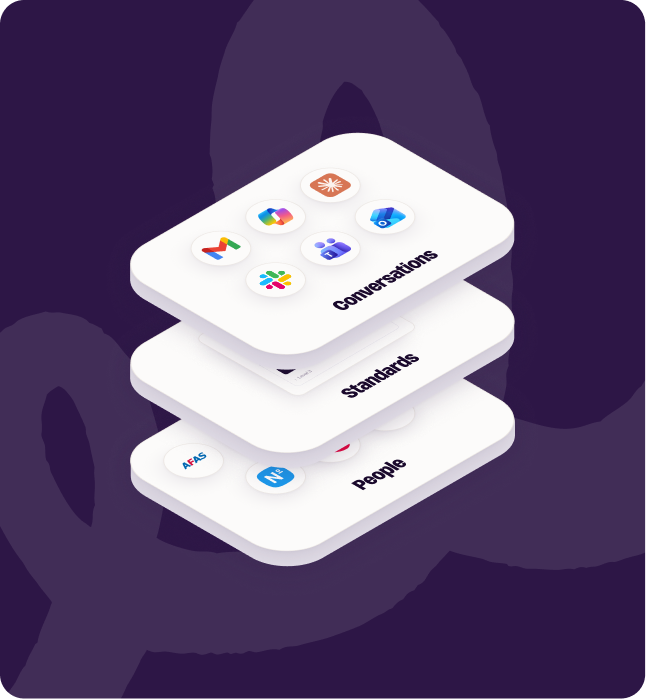
Conversations.
What was actually said. 1:1s, check-ins, notes, action points, recorded and summarised conversations, evaluations. Kept over time instead of overwritten, so March is still there in September.
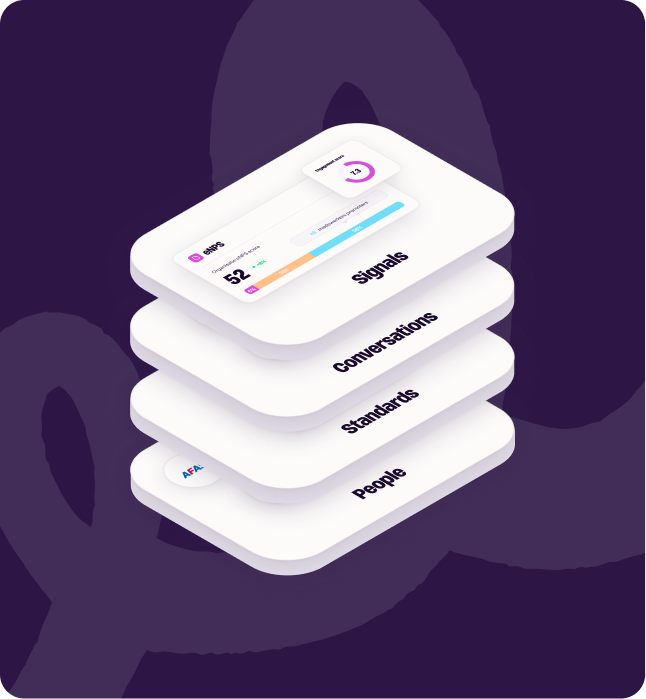
Signals.
What the people closest to the work are seeing. Their observations, feedback, notes and judgement add meaning that systems alone can’t capture. Treams makes those signals easy to record, connects them to the right people and moments, and brings them back when they matter.
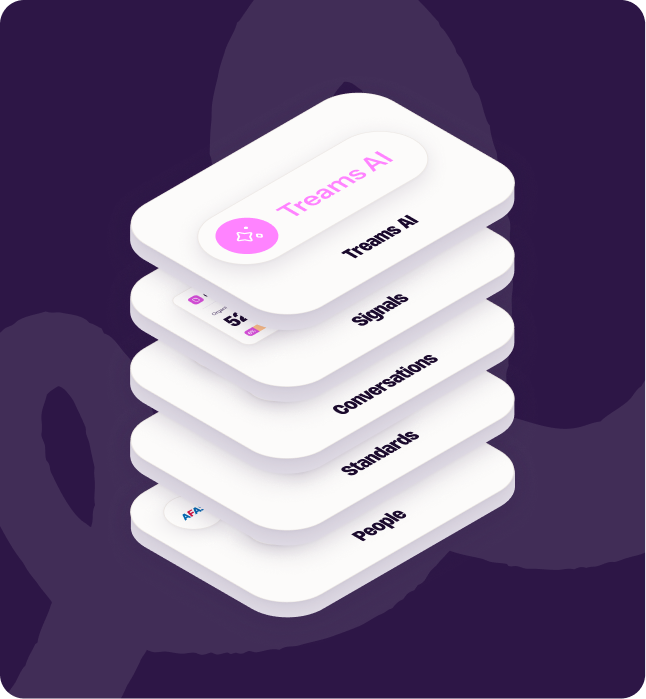
Treams AI.
The layer that reads across all four and carries our own view of what good management looks like. Our beliefs, your data. Nothing your people write feeds anyone else's answers.
What changes when the context is already there.
What we hear from organisations that run their cycle with Treams AI switched on.


ANB no longer assesses where you’re falling short, but discusses where you want to go
Instead of 4 weeks or more
A performance cycle that used to take a month now runs in a week.
Time per review
Down from two hours, because the manager isn't starting from an empty form.
More goals set
When goals live in the weekly rhythm, they’re more likely to get set and followed up.
Time saved per 1:1
Goals, open actions and the last conversation are already there when the manager opens their 1:1.
Six things Treams AI takes off your plate.
Nothing new to learn. Six things that are simply already done by the time you open a conversation.

Tell Treams what you need from the conversation. It builds a relevant agenda from goals, previous conversations and open actions.

Get help turning what you observed into feedback that's specific enough to act on.

Treams spots vague language, missing measures and goals that aren't aligned.

Suggested answers draw on the year that already happened. You review, edit and sign.

Record the conversation. Treams captures the summary and actions, so the next conversation starts where this one ended.

"What keeps coming back in my feedback?" "Who needs my attention?" "Summarise my year." Ask questions across the context you're allowed to see.

Does Treams AI make decisions about people?
No. We will never let AI judge people or make decisions about them. Performance management stays human work.
Treams AI gives you insight, recommendations and time back. What you do with it is up to you. The conversation, the judgement and the decision stay with the manager.
Is what we type used to train a model?
No. Your team data stays protected and is never used to train public AI models.
Does Treams use AI to write evaluations?
No. Treams uses AI to surface insights and help managers prepare. Not to write evaluation text for them. The conversation stays human. AI supports the manager; it doesn't replace them.
Where is our data stored and processed?
Treams uses carefully selected subprocessors for, among other things, hosting, storage, support, product features, and payment processing. The subprocessors page describes, for each subprocessor, the purpose for which it is used, what data is processed, where the data is stored, and the applicable retention period.
The primary hosting and processing of data in OnTreams takes place within Europe, including via Amazon Web Services and Microsoft Azure. The current list of subprocessors is available at: https://treams.com/hr-software/security-privacy/subverwerkers/