
Someone is going to ask why they earn less than the person next to them.
And the honest answer, that it is roughly where they landed when you hired them, stops being good enough. Treams gives managers and HR the record behind every pay decision, built while the work happens.


Your managers will have to explain pay decisions they cannot remember making.
A manager sits down with someone in their team and has to say why the raise landed where it did: which performance, measured against which expectation. Decisions that were taken carefully but hard for managers to justify because the set-up they were handed never asked them to record anything while it was happening.
Legislation changes aside, this is not how performance should work. The conversations happen every week. Managers know where someone is slipping and what makes them shine.
Our job is to have that ready when it counts, so a pay decision is explainable anywhere in the organisation, and a surprise to nobody.



Build the case while the work is happening.
Expectations that exist before the review does
You cannot justify a pay difference until the work itself is valued on something sturdier than a job title. Treams makes the level and its expectations visible at any time, so "meeting expectations" means the same thing in Rotterdam as it does in Antwerp.
Job levels from Styr, in the tool managers open every week.
Styr's job evaluation method turns roles into a weighted job architecture with gender-neutral levels. Through our partnership those profiles sync into Treams, so a manager judges someone against the same bar that set their band. Re-weight a role in Styr and the change follows; nobody retypes a profile into a second system.
Goals tied to the expectations of the level.
What good looks like at this level, turned into something you can track.
Growth paths per role.
People can see what the next level asks of them before they ask you why a colleague got there first.
One place where the standard lives.
Managers, employees and HR read the same profile. Nobody maintains two versions of the truth, and nobody argues about which document is current.
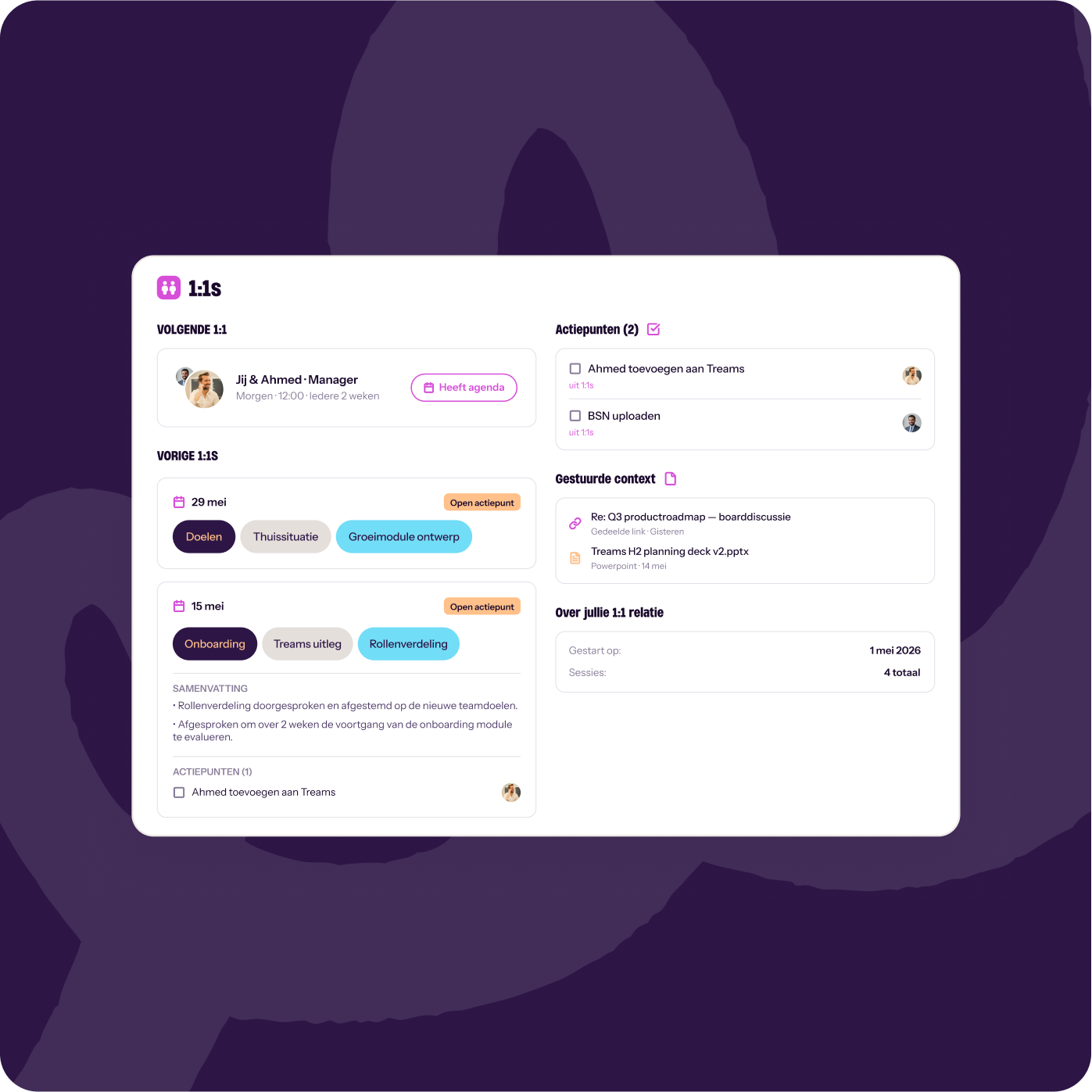
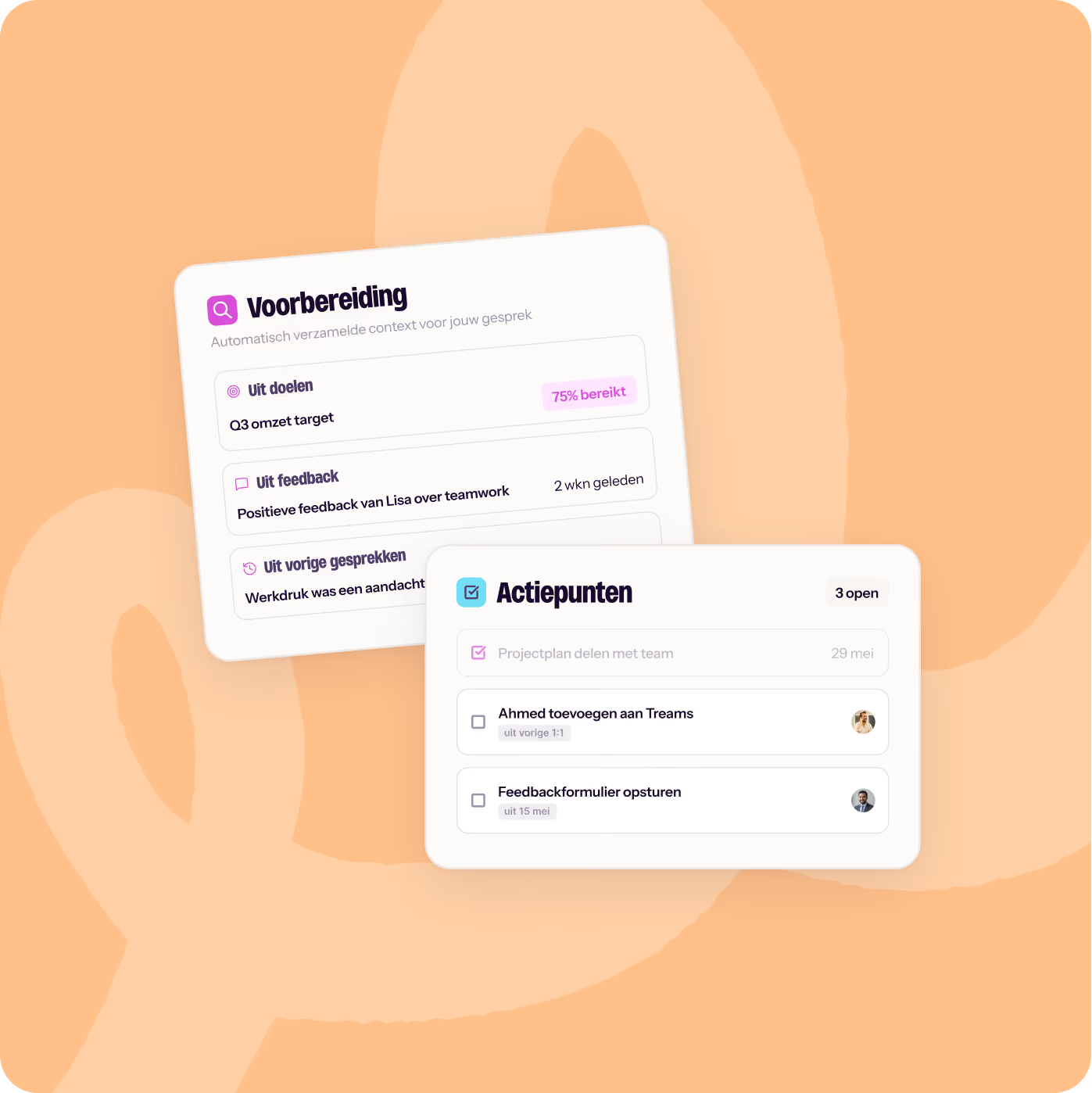
Evidence that builds up as the work happens
The record has to exist before the decision does. Treams builds it one conversation at a time, so nothing gets reconstructed afterwards.
Recurring 1:1s with a shared agenda.
Both sides bring topics; notes and decisions are captured without anyone writing a report afterwards.
360° feedback.
Input from colleagues, direct reports and (where it makes sense) external contacts, so a rating rests on more than one person's impression.
Agreements that carry forward.
Every commitment from the last conversation reappears in the next one with its history attached.
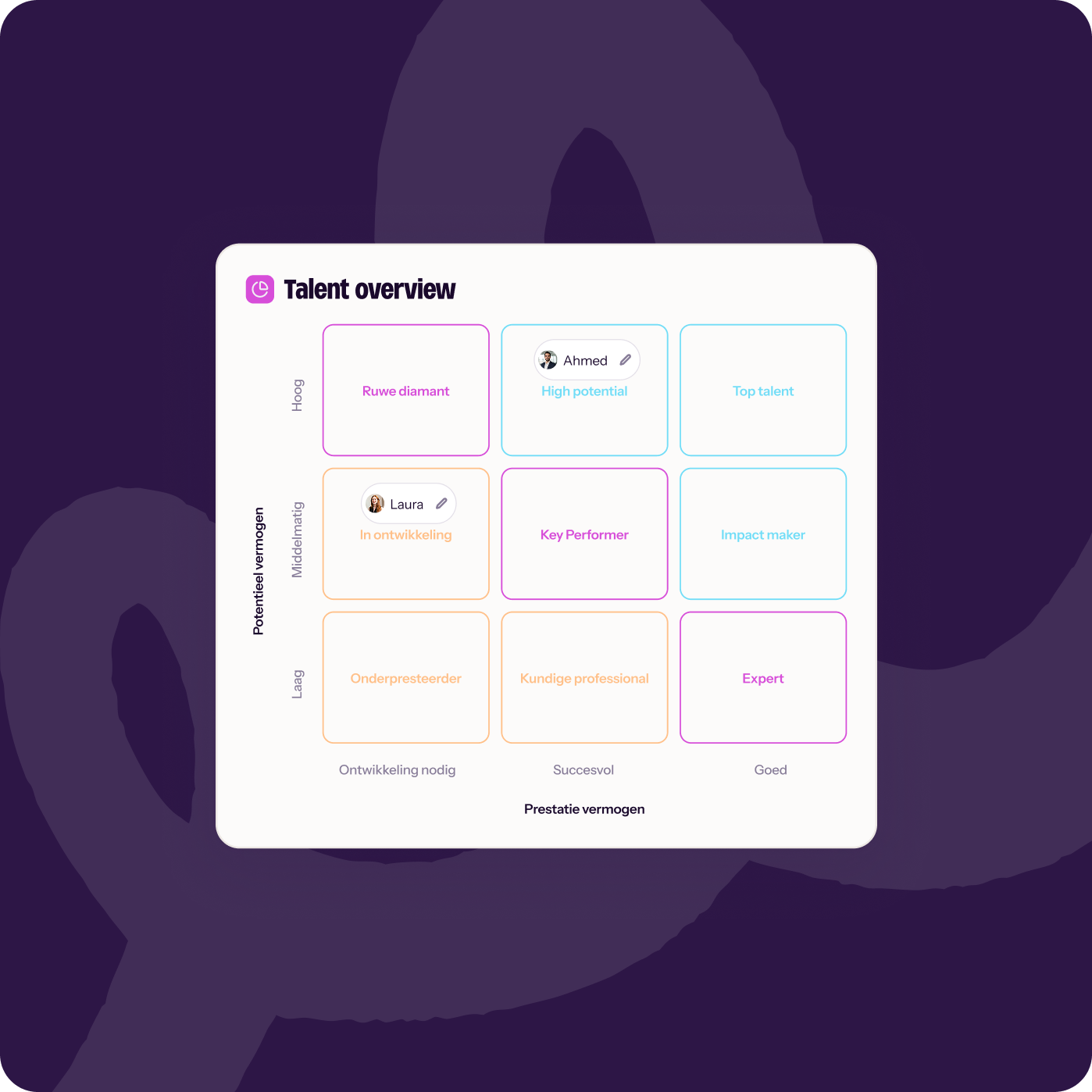
Reviews and calibration that survive a second reading
Nobody spots inconsistent scoring while it is happening. It shows up when the same role is compared across teams, long after the pay decisions were made.
One scale and one set of criteria for every manager.
The gap between a generous team and a strict one becomes visible instead of being absorbed.
Calibration and 9-grid talent reviews in a shared view.
The discussion, the adjustment and the reason behind it stay with the record.
Invisible AI Admin.
Treams drafts from context that already exists, so a review stops rewarding whichever manager writes best under time pressure. It also means nobody is pasting a team member's performance into a public chatbot to get through review week.
Progression you can point to
Article 6 asks for pay progression criteria that are objective, documented and applied without discretion. In practice, a promotion has to trace back to something other than visibility.
Promotion criteria per level, published to everyone.
The same answer whether it comes from HR, from the manager, or from a colleague in the kitchen.
Progress tracked through the year
By the time the decision is made the case is already written.
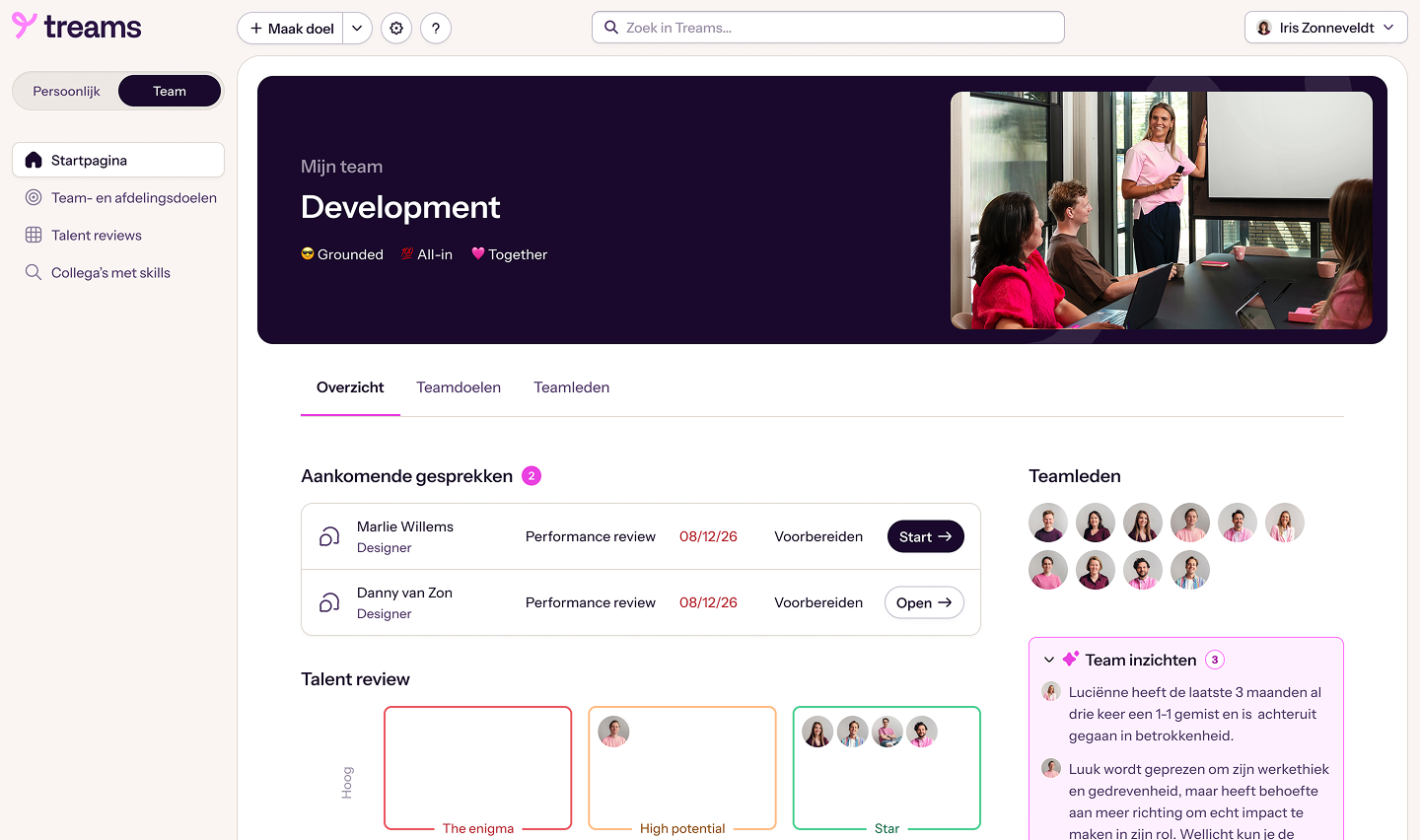
The HR overview underneath it.
Ratings by team, by manager and by level: where they cluster, where they drift, and which manager needs a conversation before the works council has one with you.

What our
clients say.











Ready to see it
for yourself?











We already have job profiles and pay bands. Why isn't that enough?
Because the Directive asks about progression as well as placement. A band tells you the range. It does not tell you why this person sits at the top of it and that one sits near the floor, or what either of them would have to do to move. That answer lives in performance data, and in most organisations it is either missing or it was written in the same week as everyone else's.
Is Treams a compliance tool?
No, we aren't. Treams does not weigh your job architecture, calculate your 5% categories or file your gender pay gap report. Styr handles the first, your reward advisor the second, your HRIS the rest. Treams covers what none of them can: making sure the performance half of your justification exists, in writing, at the moment the decision was taken.
Does Treams replace our existing HR system?
No. Treams integrates with systems like AFAS, Visma, SAP, and NMBRS so your employee data stays in sync. Treams handles the performance cycle. Your HRIS handles the records. You don't need to choose between them.